In today’s economic and competitive environment, industrial companies are looking for solutions that offer flexibility, efficiency, and cost savings. The rental of structured pavilions emerges as a viable and advantageous alternative to the construction of permanent structures. This article explores the main advantages of this innovative option.
1. Flexibility: Adaptability and Mobility
One of the greatest advantages of renting structured pavilions is the flexibility it provides. Companies can adjust the size of their facilities according to their needs, whether for expansion during periods of higher production or reduction during times of lower activity. In addition, the mobility of the pavilions allows companies to relocate their operations whenever necessary, which is especially useful for temporary projects or for companies operating in multiple locations.
2. Cost Savings: Reduced Costs and Included Maintenance
Renting a structured pavilion is significantly more cost-effective than building a permanent structure. The reduced initial cost allows companies to allocate financial resources to other critical areas of the business, such as innovation, marketing, or equipment acquisition. In addition, many rental contracts include maintenance and repair of the structures, eliminating unexpected additional costs and allowing for better financial planning.
3. Fast Installation: Agility and Operational Continuity
The installation of structured pavilions is fast, which is crucial for companies that need to start operations within short timeframes. This agility minimizes downtime, allowing companies to maintain productivity. In cases where changes or expansions are needed, the speed of installation and adaptation of the structures ensures that operations continue almost without interruption.
Use Cases and Applications
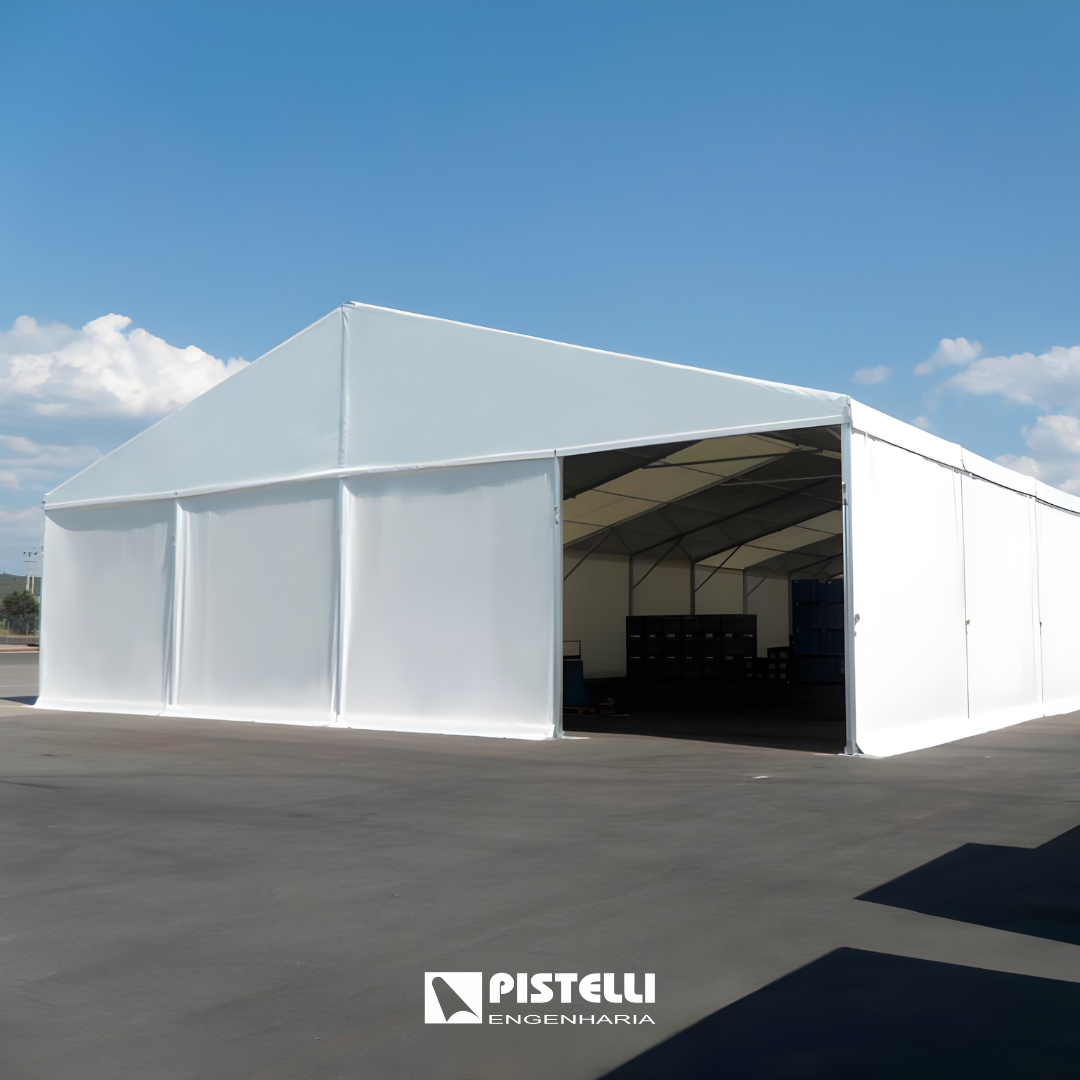
Structured pavilions can be used in a wide range of industrial situations, from storage and production to temporary work areas. The versatility of these structures allows them to be customized to meet each company’s specific needs, including size, layout, and additional features such as temperature control and ventilation systems.
Sustainability and Environmental Responsibility
The use of structured pavilions also brings environmental benefits. Temporary construction generates less waste and has a lower environmental impact compared to permanent construction. In addition, many of the materials used in the structures can be recycled or reused, contributing to more sustainable business practices.
Less Bureaucracy: Easier Permitting
In many cases, temporary structures require fewer permits and comply more easily with regulatory standards than permanent buildings. This reduction in bureaucracy speeds up the implementation process, allowing companies to start their operations more quickly and efficiently.
Safety and Protection
Modern structured pavilions are built to withstand adverse weather conditions, ensuring the safety of goods and internal operations.
The rental of structured pavilions represents an efficient, cost-effective, and flexible solution for modern industry. With advantages ranging from adaptability and mobility to cost savings and fast installation, these structures emerge as an ideal alternative for companies looking to optimize their operations and resources.